

Detritus

It’s not that you don’t notice rubbish in an urban environment – of course you do – but there’s so much of it that it blurs into a grey acceptance. How many pavement slabs do you have to walk on before you see a sliver of red KitKat paper, a pinch of silver foil from a chocolate bar, a tear-off bit from a bag of peanuts or a crisp packet? Fag ends are everywhere. It’s gross and slovenly and ubiquitous.
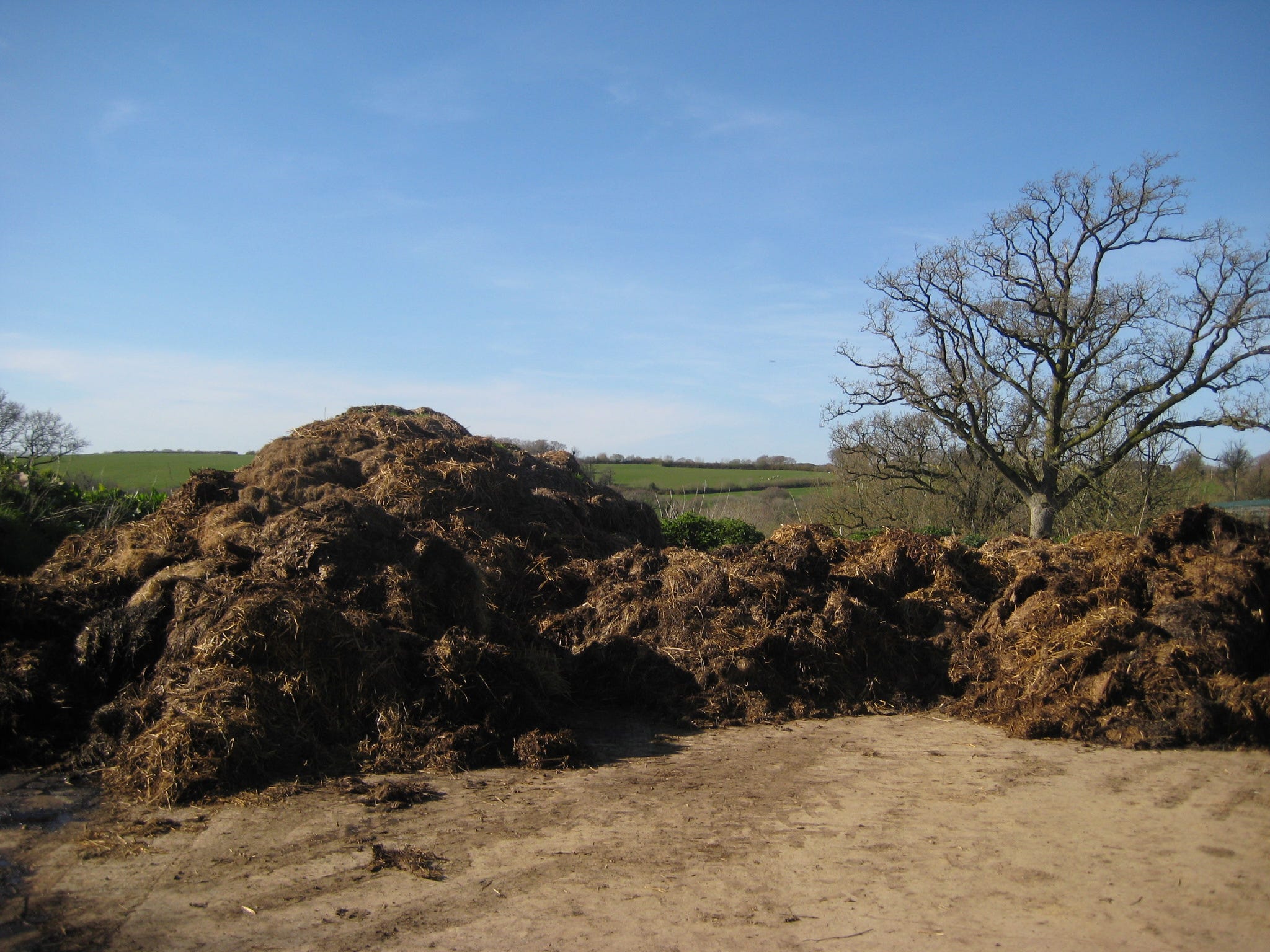
Our muck heap
There’s an expectation that rural areas will be less filled with rubbish, although fly-tipping is horribly common and is dumped in huge quantities, and people seem to fling with generous abandon their takeaway cartons and beer cans from their truck windows, despoiling nature and causing wildlife all sorts of harm. Humans can be pretty despicable. Farms are notorious for being shit heaps. We literally have shit heaps, but they consist of cow muck and straw, or duck, goose and chicken shit and straw, pig poo and straw… you get the idea, all breaking down to produce glorious composted farmyard manure, our very own black gold. There are farms that have unruly piles of baler twine, dumpy sacks, rusting ancient implements, lumps of timber, concrete blocks, old gates, pieces of tin sheets and angle iron, rotting tractors and disintegrating tractor tyres. Some are being hoarded for later use, some are just sitting there waiting for some future generation to deal with the detritus.
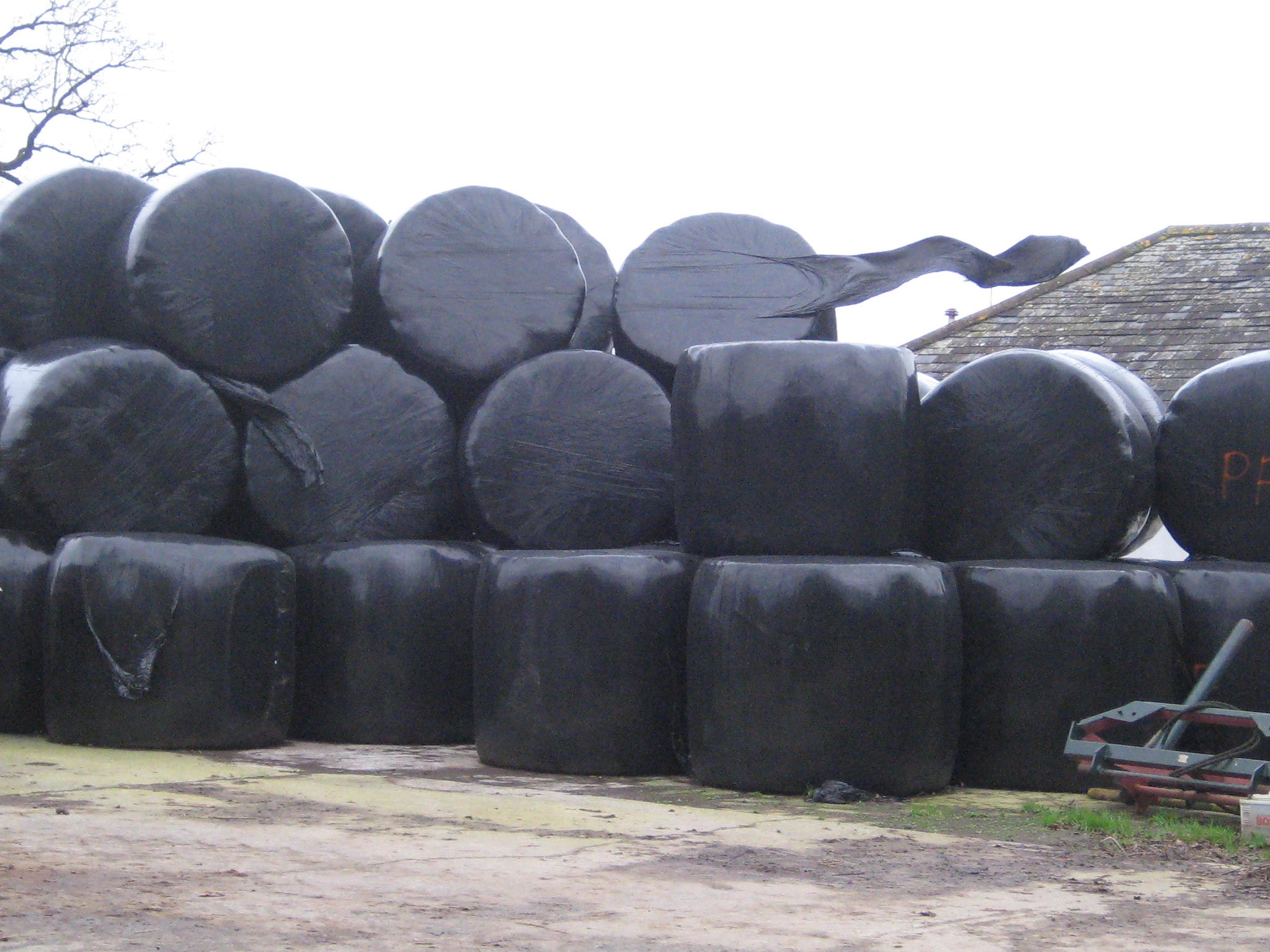
Neatly stacked haylage; you can see how the wind can whip off some of the plastic
We’re pretty tidy as farms go, partly because it’s in our nature, partly because of all the courses we run here. The idea that people leave thinking farms are a disastrous mess is not the impression we wish to pass on. This doesn’t mean there are no heaps of this and that. There are. We have to store gates, fencing stakes, equipment, baler twine and dumpy sacks somewhere. But we pick up and dispose of rubbish and don’t leave anything lying around that you could classify as litter. Still, litter of various kinds finds it way in.
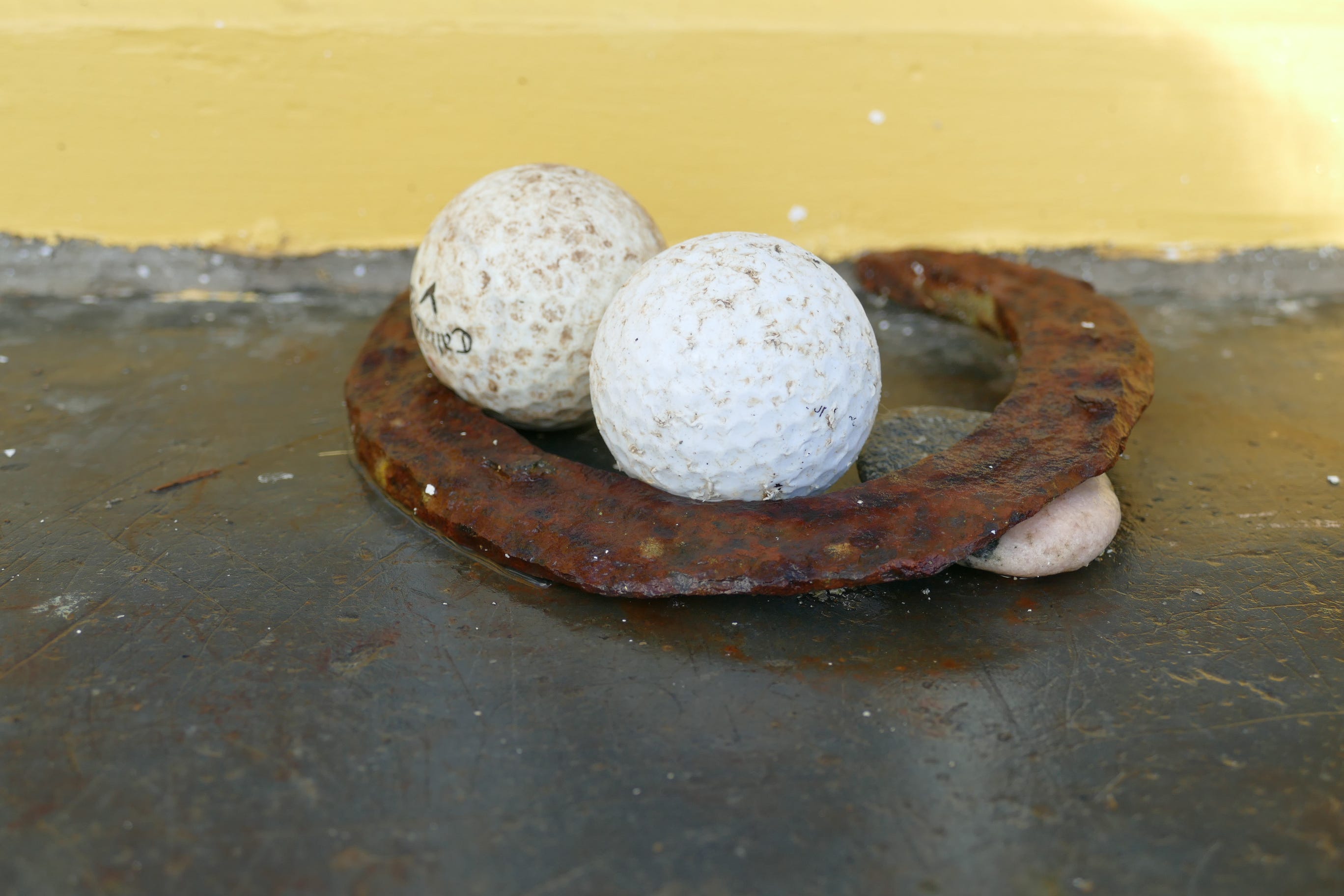
Today I found another golf ball. These arrive in one of two ways. The first is via our hay and straw. Either they have been baled into straw we buy in, or a golf ball in one of our fields has been baled into our own hay. The second is related to the first, because neither of us play golf and we do not drop golf balls in our fields as a bit of fun. No. We are five miles from Ashbury Golf Course as the crow flies. And the crow is the critical word here. Corvids pick up stray golf balls off the course and think they have been clever and have a nice eggy meal awaiting them as they head back to their roost. When they realise their egg is either rock solid or not in fact an egg and either way inedible, they drop the balls hither and yon. We have one particular large oak tree under which we find all sorts of things dropped by the foraging permanently hopeful corvids. Bales yield all sorts of other things from fields we thought were clean as a whistle. A spanner, a tractor part, a dog chewtoy. You might find one item per fifty large bales, but it doesn’t stop me being vigilant as I unwrap the hay to feed the cattle. You might not want to eat slugs with your lettuce, I don’t want to feed a stomach piercing piece of wire to my cows.
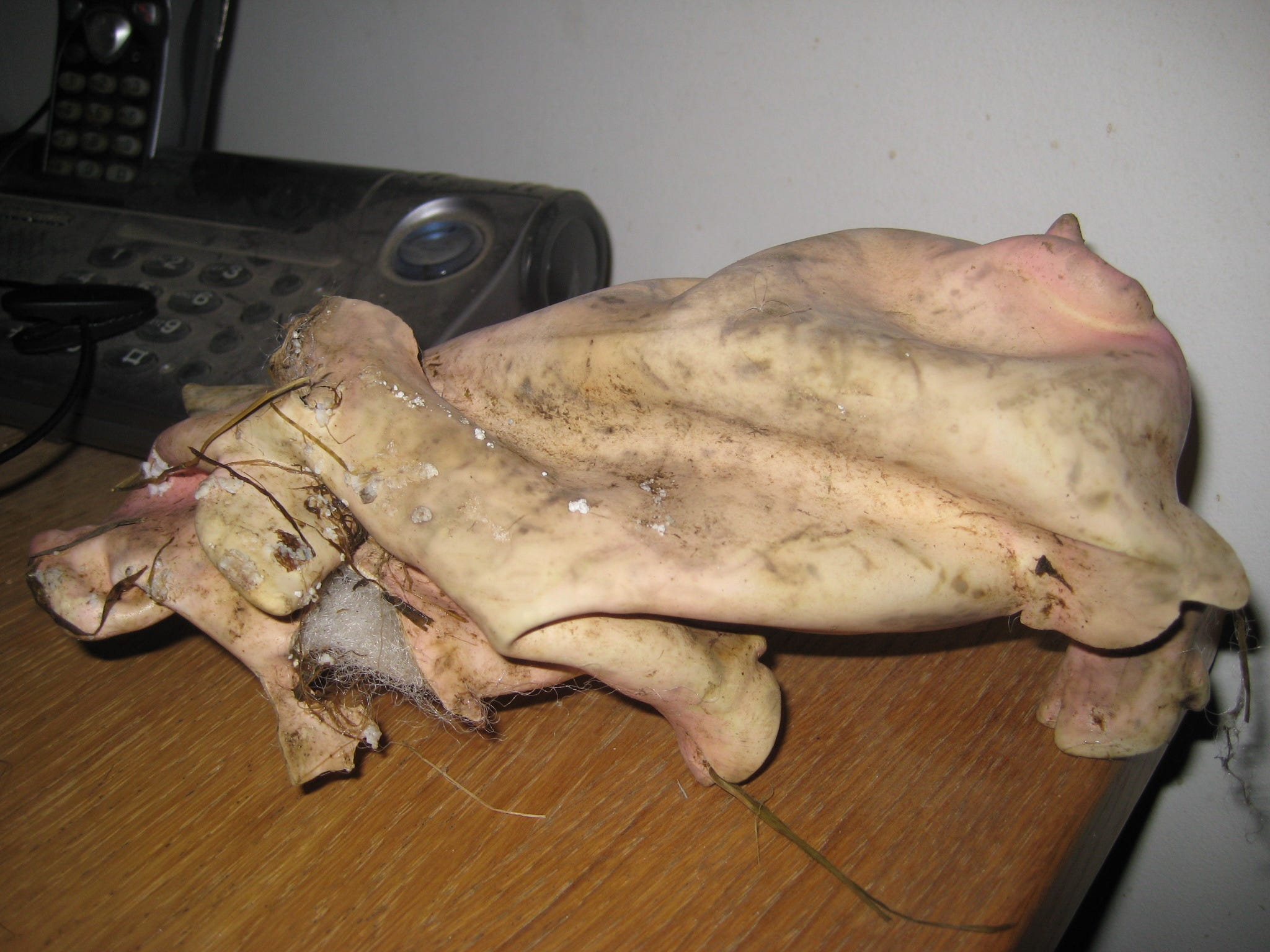
A dog chewtoy piglet found in a bale - disconcertingly lifelike in colour
And as a last word on the discarded bits of life, at this time of year, with the woodburner doing its damnedest to keep us warm, there’s not a curl of paper (wrapping, news, instruction manual, post-it, bulletin, flyer, note, crepe, or tissue) or shard of cardboard that gets into the outer world, other than as heat and a wee bit of smoke.